Cruelty Learned Better Manners

The Costumes of Power
Human cruelty did not disappear.
It simply learned how to dress better.
For thousands of years we have told ourselves the same comforting story: that humanity evolves, that we learn from the past, that the worst chapters remain behind us.
But look closely.
The costumes changed.
The language changed.
The systems became more polished.
The cruelty stayed.
Slavery did not vanish.
It reorganized itself into supply chains and production belts where speed is rewarded and exhaustion remains invisible.
Silence did not disappear.
It became public relations, rehearsed statements, carefully edited news designed to calm rather than reveal.
Control did not fade.
It simply learned to speak the language of order, stability, and progress.
And we accepted it.
We accepted it because we are taught from childhood that obedience keeps the world functioning, that rules exist for everyone, that systems are built for the common good.
Yet history tells another story.
Many of the doctrines we are told to follow are quietly ignored by the very people who benefit from them.
Power rarely lives by the rules it writes for others.
And while these enormous structures continue turning—markets, institutions, governments, narratives repeated until they sound like truth—something much smaller and more fragile happens somewhere else.
A person is wondering what is wrong with them.
Someone is asking themselves if it is safe to say what they feel, if it is acceptable to exist the way they naturally are, if speaking honestly will cost them belonging.
That moment has repeated itself across centuries.
Different century.
Different language.
The same doubt.
The tragedy of our species may not be cruelty itself. Cruelty has always existed.
The deeper tragedy is how easily human beings can be trained to accept it.
We learn to look away.
We learn to repeat what we are told.
We learn to protect systems even when those systems quietly grind people down.
All for stability.
All for order.
Sometimes for nothing more than a paycheck.
And so the world continues as it has for centuries—refined, efficient, technologically advanced—yet still capable of leaving human beings feeling unseen, unheard, and alone.
Civilization did not erase the old injustices.
It simply modernized them.
The chains became contracts.
The silence became policy.
The obedience became culture.
The currency became worth.
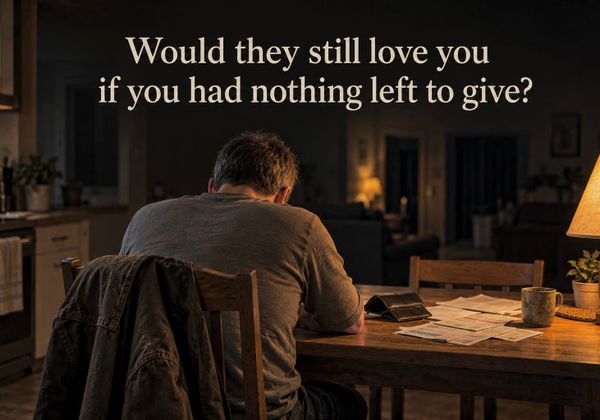
And somewhere tonight, a person sits quietly believing something is wrong with them — because they think differently, feel too deeply, refuse to trade compassion for advantage, refuse to move through life guided only by greed.
For centuries we have been trained to call this difference a flaw.
But perhaps it was never the flaw.
Perhaps it is the part of us that refuses to disappear.