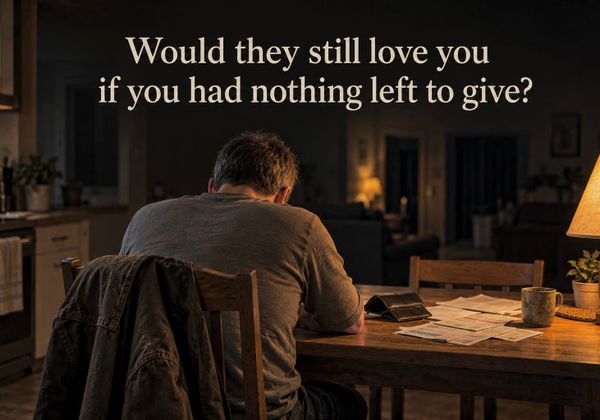
Identity Collapse

There’s a part of this no one explains, not even the people who talk about trauma like they understand it. They tell you about the obvious things—panic, fear, memories—but they don’t tell you what happens when everything goes quiet and you’re left alone with yourself, expecting relief, expecting clarity, expecting to feel like you again… and instead, you feel nothing that resembles who you thought you were.
It doesn’t happen all at once. It happens in small, almost unnoticeable ways, the kind you dismiss at first because life keeps moving and you’re still functioning—you answer messages, you show up, you say what needs to be said—but underneath it, there’s a constant, subtle disconnect, like you’re living your own life from a distance, aware of it, but not fully inside of it.
You try to reach for simple things—what do I like, what do I want, what feels right for me—and the answers don’t come, not because you don’t have them, but because for so long you learned not to rely on them. You learned to read the room before reading yourself, to adjust before speaking, to soften your edges so things wouldn’t break, and little by little, without even noticing it, your own voice stopped being the one you trusted.
That kind of adaptation doesn’t feel like loss while it’s happening; it feels like survival, like doing what you have to do to keep things together, to keep people close, to avoid more damage than you can handle. And it works, sometimes for years, until the situation changes, the person leaves, or the chaos finally ends, and you’re left in a space that should feel like freedom, but instead feels unfamiliar, almost empty, because the version of you that functioned there doesn’t have a place to exist anymore.
So you try to go back, to find who you were before all of it, but there isn’t always a clear “before,” and even if there was, you might not recognize her now. In some cases, that version was already shaped by expectations, by early experiences, by the need to be something for someone else, which means you’re not returning to yourself—you’re meeting yourself for the first time, without a script, without a clear identity to step back into.
That’s where the confusion settles in, not as panic, but as a quiet, persistent uncertainty that follows you through your day, showing up in decisions that feel heavier than they should, in moments where nothing feels completely right, in a constant questioning of your own perception, because you’ve spent so long overriding it that trusting it again feels unfamiliar.
It can feel like something is missing, like pieces of you were lost somewhere along the way, but what’s actually happening is more subtle than that. It’s not that something essential disappeared; it’s that everything that wasn’t truly yours is no longer holding you together, and without it, you’re left with space—uncomfortable, undefined space—that you don’t yet know how to fill.
Rebuilding from that place doesn’t look like a sudden realization or a clear answer; it looks like small, almost invisible moments where you choose something because it feels right, even if you can’t explain it, where you notice a preference and don’t immediately dismiss it, where you allow yourself to sit with uncertainty instead of rushing to replace it with something familiar but false.
It’s not clean, and it’s not fast, and it doesn’t feel like progress most of the time, but it is movement, the kind that doesn’t depend on who you had to be before, the kind that slowly builds something that actually belongs to you.
Identity collapse isn’t the end of who you are. It’s what happens when the roles, the adjustments, and the survival patterns that once held everything together start to fall away, leaving you in a place that feels unfamiliar, but is, for the first time, entirely yours to define.