The End of Wasted Love

The End of Wasted Love
There comes a moment when clarity replaces hope.
Not because hope was foolish,
but because it was overextended.
This is not the moment people imagine —
no explosion, no bitterness, no dramatic closing of the heart.
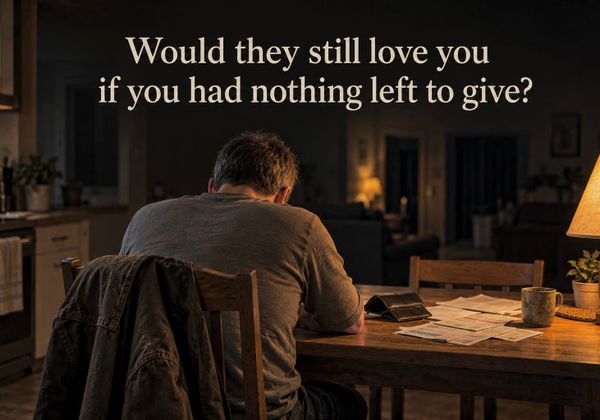
Just a quiet recognition that something precious
has been consistently placed where it could not live.
Love was never the mistake.
The mistake was assuming that depth would be met
simply because it was offered.
Love given without alignment doesn’t multiply.
It dissolves.
Time given without choice doesn’t deepen life.
It drains it.
And work done without soul doesn’t build character —
it erodes the self, slowly enough
that people learn to call it normal.
We are taught that endurance is virtue.
That sacrifice is proof.
That if something hurts long enough, it must mean something.
It doesn’t.
Meaning requires reciprocity —
not in grand gestures,
but in presence, honesty, and shared weight.
What most people call commitment
is often fear dressed up as loyalty.
What many call love
is convenience with good branding.
And what passes for stability
is frequently just mutual avoidance of change.
Seeing this doesn’t make you cynical.
It makes you precise.
There is a difference between loving deeply
and loving indiscriminately.
Between giving freely
and giving against your own knowing.
Some people don’t lie outright.
They simply take what is offered
and never ask what it costs.
Others stay —
not because they are aligned,
but because leaving would require truth.
So when someone says
“love always returns,”
what they often mean is this:
love returns when it is given where it can land.
Love placed in emptiness does not echo.
It disappears.
This is not a call to withdraw.
It is a refusal to continue misplacing
what is alive.
The end of wasted love
is not the end of love.
It is the end of pretending
that depth owes itself to anyone
who cannot meet it.
A life lived unconsciously
is the real lie.
Not society. Not structure. Not work.
The lie is staying
where your inner life
must shrink to survive.
Choosing otherwise doesn’t make you
ungrateful, dramatic, or difficult.
It makes you accurate.
And accuracy, once earned,
is something you don’t give up again.