The Way People Leave Without Leaving

At first, nothing is obvious.
Everything still looks the same.
The words are still there. The routine is still there.
But something shifts.
Not outside. Inside.
And if you’ve ever been there, you feel it before you understand it.
Something is pulling away.
Not suddenly. Not in a way you can point to.
Just enough to make you question what you’re sensing… and then doubt it.
Responses get shorter.
Silence stretches longer.
What used to feel natural starts to feel forced.
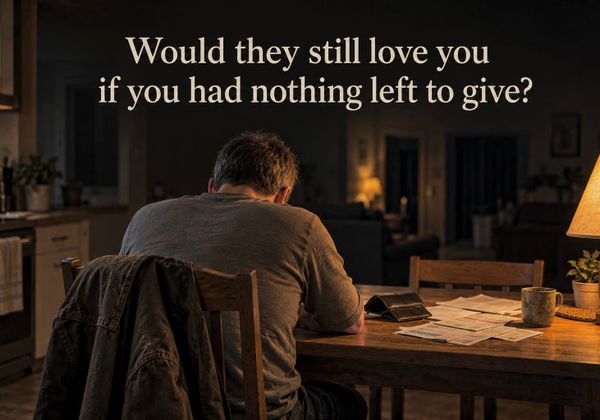
And you’re left there, trying to understand something that no one is saying out loud.
That’s how it starts.
Not with an ending.
With a slow, quiet separation.
Piece by piece.
Not because it had to end that way…
but because no one chose to face it when it started changing.
Because honesty requires a moment most people don’t want to step into.
A moment where you have to say:
this is not the same anymore.
Where you risk the reaction.
The questions.
The weight of being the one who names it.
So instead of speaking, people step back.
A little at a time.
They stay present just enough to avoid the conversation…
but not enough to actually be there.
And that’s where the damage happens.
Because when something ends without being said, it doesn’t close.
It tears.
It leaves the other person standing in something that no longer exists, trying to make sense of pieces that don’t fit together anymore.
Not because they weren’t willing to understand…
but because they were never given the truth.
And that’s what lingers.
Not the ending.
But the absence of it.
The conversations that never happened.
The words that were avoided.
The moment that could have been hard… but clean.
Instead of quiet… and permanent.