We Didn’t Break. We Absorbed.

On what happens when life outpaces human limits.
What we are living through did not begin as curiosity.
It began as collision.
Not because humans suddenly wanted to understand themselves better —
but because the world changed faster than humans could absorb.
Wars.
Industrialization.
Urban crowding.
Economic instability.
Digitization.
Permanent urgency.
Endless comparison.
Productivity as worth.
These weren’t gentle transitions. They were ruptures.
And when pressure becomes constant, differences stop being invisible.
Difference existed long before explanation
Humans have always been different:
• in sensitivity
• in rhythm
• in tolerance for noise, authority, speed, abstraction, isolation
What changed was not people.
What changed was the environment.
A world that once allowed variation collapsed into systems that demanded:
• uniform schedules
• standardized behavior
• emotional containment
• continuous output
Those who adapted were called “functional.”
Those who didn’t were called “the problem.”
It’s not that no one noticed.
People did notice.
They said things like:
• That job is going to kill you.
• That pace will change who you are.
• That life isn’t sustainable.
But noticing is not the same as stopping.
Because modern life doesn’t just apply pressure —
it rewards endurance.
Money blurs warning signs.
Status reframes damage as sacrifice.
Reputation turns survival into pride.
So the signals were acknowledged — then overridden.
Those who spoke too clearly were labeled:
• weak
• sensitive
• difficult
• ungrateful
Not because they were wrong,
but because they disrupted the story that endurance equals success.
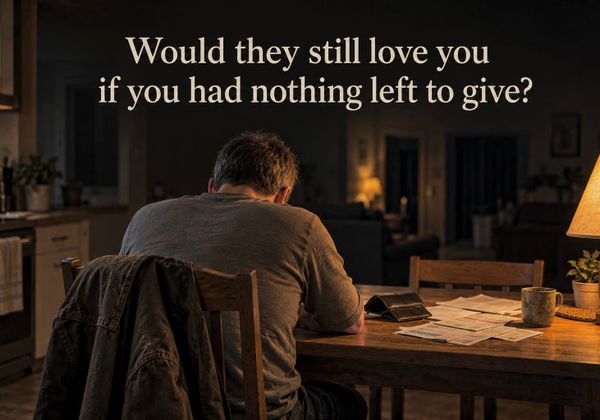
Silence wasn’t ignorance. It was adaptation.
Many people saw the cost coming.
They just believed they could outrun it.
Or that it would arrive later.
Or that it would happen to someone else.
And when the damage finally showed itself,
it was framed as personal failure —
never as accumulated exposure.
This is how normalization works.
The warning becomes a joke.
The concern becomes envy.
The damage becomes invisible — until it isn’t.
Not because humanity is blind,
but because stopping requires giving up rewards that were hard-won.
We engineered it.
We normalized it.
And then we adapted to the damage in silence.
What we are actually observing
Not pathology.
Not defect.
Not weakness.
We are observing human nervous systems under sustained pressure.
We are watching:
• meaning collapse under mechanization
• attention pulled beyond biological limits
• social bonds thinned, accelerated, and monetized
• safety replaced by performance
Different humans absorb the same world differently — always have.
What changed is that the world stopped accommodating difference.
We personalized what should have been examined systemically
Instead of asking:
What is this way of life doing to people?
We asked:
What is wrong with them?
Traits became explanations.
Labels became containers.
Management replaced understanding.
Not because people were broken —
but because questioning the structure itself was never rewarded.
Where now begins
We are not witnessing a new failure.
We are witnessing accumulated recognition.
The realization that:
• the cost was deferred
• the bill arrived late
• and it arrived inside people’s lives and bodies
We didn’t suddenly become fragile.
We lived too long inside systems that required us to override ourselves.
And now — finally —
the silence can no longer hold.