What Their Past Will Ask of Your Future
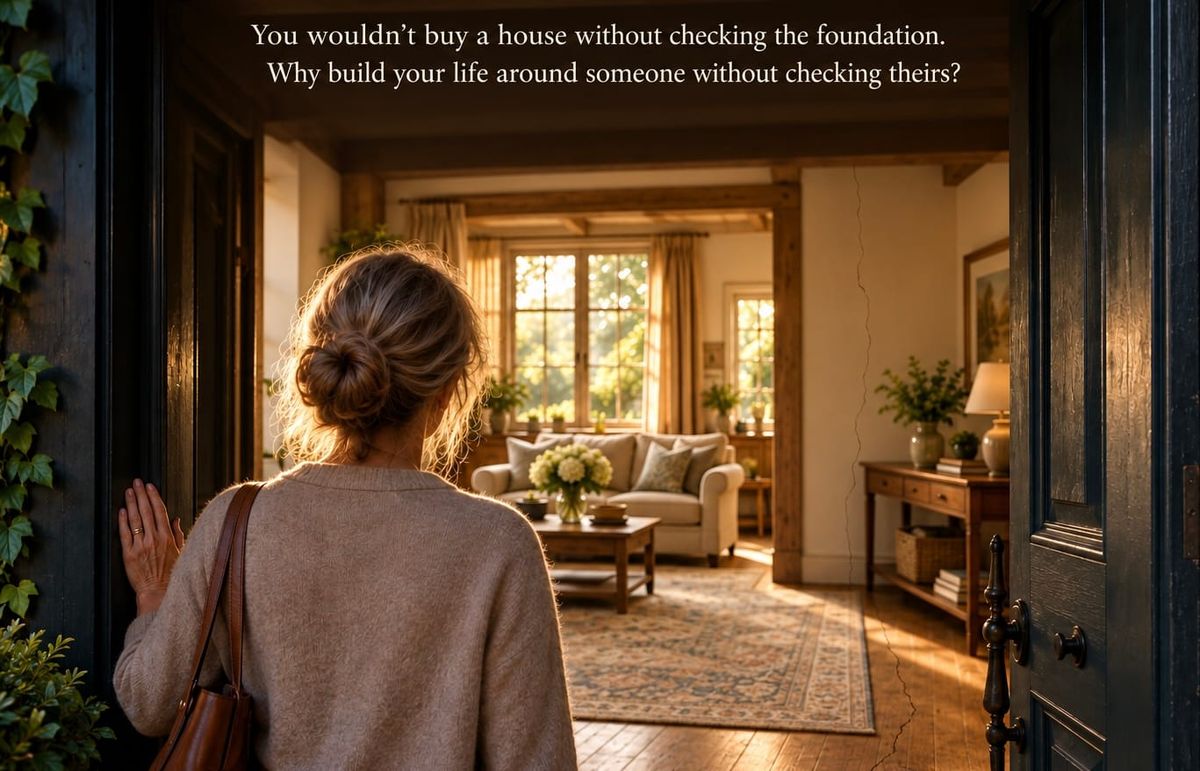
When we consider buying a house, we ask questions. We want to know what holds it up, what needs fixing, and what the neighborhood is like. We walk through the rooms and try to imagine our ordinary lives there.
But when we fall in love, sometimes we are so relieved to have found someone that we barely look beyond the front door.
Especially after years of disappointment or loneliness. Someone arrives, makes us laugh, listens, and wants us. Suddenly there is a reason to look forward to a message, to get dressed, to imagine a future with another person in it.
It can be difficult to interrupt that happiness with practical questions.
I think we should ask them anyway.
Later in life, choosing a partner deserves at least as much thought as choosing a home. We know more about what we need by then. We have habits, limits, and things we worked hard to survive. Starting over again may cost more than we are willing to spend.
So, what is the foundation like?
Can you trust what this person tells you? Can they admit a mistake? When you disagree, can you stay in the room together without someone making the other afraid to speak?
A house can look beautiful on a sunny afternoon. You need to know what happens when the weather changes.
And who else has keys?
A person had a life before you. There may be children, an ex-partner, parents who need care, relatives who depend on them. These connections will not disappear because the two of you have fallen in love.
Children grow up, but parenthood continues. An adult child may need financial help. A younger child needs time, attention, and cooperation between parents. Illness or a crisis can change the plans of everyone involved.
None of that makes someone an unsuitable partner. But it makes their circumstances part of the life you are considering.
Would you be comfortable with those responsibilities? Would decisions affecting your shared finances or where you live be discussed with you? Could your partner set a limit when necessary, or would you be expected to quietly accommodate every request?
You may love the person and still be unable to live comfortably with the answers.
That is something to discover before you move your whole life inside.
Then there are the windows.
Can you let light into this relationship? Can you ask an uncomfortable question and receive an honest answer? Or are certain subjects always closed, leaving you to guess what is happening behind them?
“I’ll take care of it” sounds reassuring. But if it affects your future too, you need to know what “it” is.
And how do you feel in the rooms?
Can you rest? Can you be quiet without having to explain yourself? Is there space for your interests, your friendships, your way of spending a Sunday?
Or do you already find yourself making smaller plans so there will be more room for theirs?
Perhaps the house has no bathtub.
To someone else, that is a minor detail. To you, it may be the place where you unwind every evening. You tell yourself the rest of the house is lovely. Surely you can manage without it.
Perhaps you can.
But you need to be honest about what that bathtub represents. Shared interests? Affection? Solitude? A willingness to accompany you somewhere you love?
Some differences are easy to live with. You can go to a concert alone and enjoy every minute. Other absences follow you through the day. You miss conversation at dinner. You miss being touched. You miss having someone beside you on occasions that matter.
A feature that matters to you does not become unnecessary because somebody else can live without it.
There will also be repairs.
Bodies age. People become ill. Nobody can promise a future without appointments, fear, or care. The question is whether you are willing to face that life together—and whether your own needs would receive the same attention.
You cannot inspect someone thoroughly enough to prevent every heartbreak. You can, however, stop treating the things you already see as if love will eventually fix them.
If they avoid difficult conversations now, marriage will not supply the answers. If every decision is made without you, moving in will not automatically give you a voice. If you need a peaceful life and theirs requires constant involvement in situations you cannot bear, affection will not make those demands disappear.
There is a particular loneliness in living somewhere you never feel at home.
I once believed I needed someone beside me to thrive. I no longer believe that is true for me. I can want companionship without accepting a life that leaves me anxious, resentful, or continually adjusting myself to fit.
That knowledge makes it easier to ask the questions before making the promises.
We do not have to condemn someone’s history or their responsibilities to recognize that we do not want to share them. They may be a good person. They may love us. The life available with them may still be wrong for us.
Before you step inside, ask yourself:
Can I feel at home here without spending the rest of my life trying to rebuild it?
And if the answer is no, can I trust myself enough to keep looking—or to live well on my own?
Perhaps age has brought me a little cynicism. I think I’m allowed some.
Dating can be fun. But I am rebuilding my life once again, and I want to be careful about what I bring into it. A relationship that asks me to keep adjusting, accommodating, and taking on more responsibilities would feel like having a job again.
Long hours. Not enough pay.
And I’m done with that.